
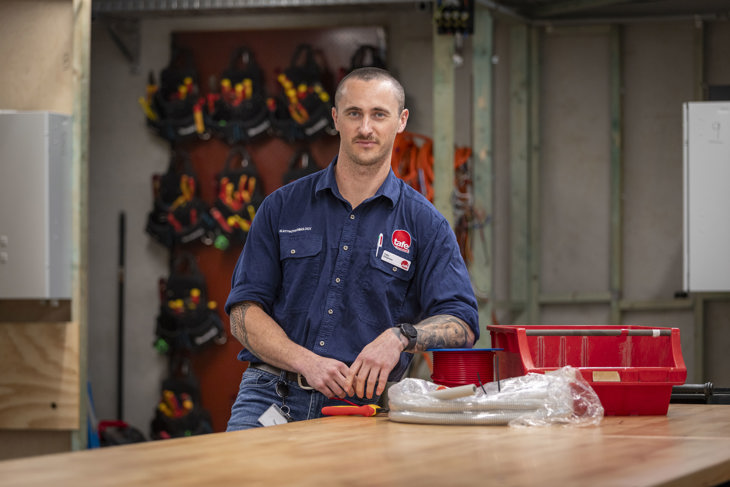
The research team at AUSMASA sat down with the TAFE Queensland team to explore the Trainer and Assessor (TAE) Pilot Program and understand how they are improving in-roads for industry professionals to become TAEs and improving retention and wrap around support for new TAEs to support the transition. Toby Chapman, a Foundation Educator at TAFE Queensland, shares his experience of the program and his transition into the TAE role.
Tell us about the program
The TAE Pilot Program provides a supported pathway for experienced industry professionals to transition into vocational education and begin a career as an educator with TAFE Queensland.
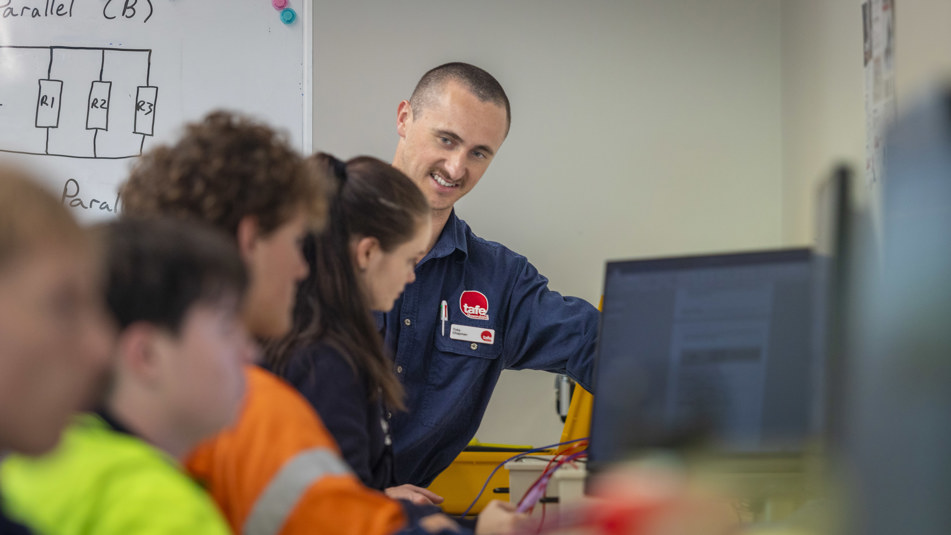
Over the past 12 months, I have been able to learn while teaching, completing the TAE alongside my teaching responsibilities. The combination of practical experience, mentoring, observation of experienced teachers and formal training has helped me develop my confidence and skills as an educator.
One of the most valuable aspects of the program was being able to work alongside experienced teachers. Having experienced co-teachers available to answer questions, share resources, provide feedback and act as a sounding board made a significant difference to my transition from industry into teaching.
The initial introduction to teaching was also very useful. I was given time to complete onboarding and undertake TAFE-specific professional development before commencing delivery. I also spent my first block observing the units I would eventually teach, which gave me a better understanding of teaching, lesson pacing, and teacher and student expectations.
What challenge or issue is this program trying to address?
The program is addressing the challenge of attracting experienced and skilled industry professionals into vocational education.
Many people from industry may have the technical knowledge and practical experience needed to become excellent trainers, but may be hesitant to make the transition into teaching. Moving from an industry role into education can be a significant change, particularly when people have existing family and financial commitments.
The program provides a pathway that allows industry professionals to gain their teaching qualification while gaining practical experience in the classroom, rather than having to make the transition entirely through theory or study first.
How are you addressing it?
The program addresses this by allowing participants to learn while teaching and by providing support from experienced educators and management.
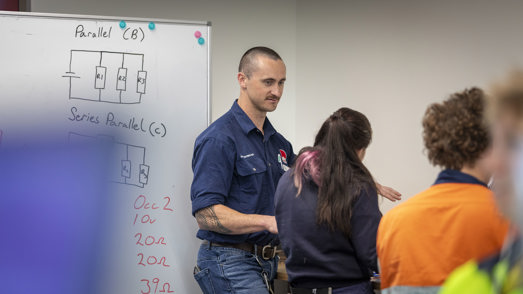
The mentoring and co-teaching model has been particularly valuable. Being able to observe experienced teachers, receive feedback on lessons and discuss ideas with colleagues helped me develop practical teaching skills much faster than formal study alone.
The program also provides TAFE-specific training and introduces participants to the systems, resources and processes they need to work effectively as educators. When gaps in training or support were identified, additional assistance was provided through experienced teachers or more formal training.
The TAE component provides an important foundation around compliance, assessment and documentation. However, I found that the practical teaching skills were developed much more strongly through being in the classroom, observing experienced educators and receiving feedback.
What is the impact of this program?
The biggest impact for me has been the confidence I have gained as an educator.
At the beginning of the pilot, my focus was primarily on delivering technical content from my industry experience. Over time, I developed a much greater understanding of lesson planning, learner engagement, questioning techniques, adapting delivery for different learners and creating a positive learning environment.
Learning while teaching was particularly effective because I could immediately apply what I was learning in the classroom. The experience of teaching each day gave context to the theory and helped reinforce new knowledge much faster than studying alone.
The support from experienced colleagues was one of the biggest factors in making the transition successful. Overall, the experience has been overwhelmingly positive and has given me confidence in pursuing a long-term career with TAFE Queensland.
I believe the program also has a broader impact for TAFE Queensland. It provides an opportunity to bring skilled people directly from industry into vocational education who may otherwise not take the leap into teaching. With the right support, these industry professionals can successfully transition into capable and confident educators.
Are there any future changes or programs you'd like to talk about?
I strongly believe the Pilot Educator Program should continue and could become an important strategy for attracting and retaining skilled trainers from industry.
I would recommend continuing the strong mentoring and co-teaching model, particularly pairing new educators with experienced teachers during their first blocks of delivery. I would also recommend providing more structured training on TAFE systems such as SPOT, Resource Bank, Master Product and other administrative processes earlier in the program.
I believe the delivery of the TAE could also be improved. The fully online, self-paced and self-taught structure was challenging, particularly for participants coming from trade backgrounds where learning is often practical, on-the-job and face-to-face. The on-campus component was one of the most valuable parts of the TAE, and I believe more face-to-face or live online workshops would improve engagement and understanding.
There could also be greater focus on practical teaching skills such as classroom facilitation, questioning techniques, learner engagement, managing diverse learners and adapting lessons to different learner needs. Where participants are already teaching 16–20 hours a week, some assessment requirements, such as recording additional teaching sessions, could potentially recognise the practical teaching experience they are already gaining.
Finally, workload and financial pressures should continue to be considered. Completing a TAE while teaching full-time can be demanding, and the reduced traineeship wage can be a significant barrier for experienced industry professionals with existing financial commitments. Reviewing incentives and the timing of incentive payments could further support recruitment and retention.
Overall, I believe the Pilot Educator Program is an excellent initiative. Industry professionals can bring valuable technical knowledge and experience into vocational education, but they need the right support to make the transition successfully. This program has demonstrated that with strong mentoring, supportive leadership and the opportunity to learn alongside experienced educators, that transition can be highly successful. I hope the program continues to evolve and becomes an even stronger pathway for attracting high-quality trainers to TAFE Queensland.
Help us inspire future talent!
Share your automotive journey with us and help bring real career pathways to life. Your story can inspire future talent and showcase the skills and opportunities driving the industry forward.
Contact us at research@ausmasa.org.au.