
TL;DR: Australia's automotive sector operates across 8 jurisdictions with fundamentally different regulatory systems. As the electric vehicle transition accelerates demand for a new class of electrical skills, the absence of a coherent national framework is shifting from an inconvenience to a genuine workforce risk. Any licensing response (if there is any) must be evidence-based, task-focused, and risk-proportionate, and industry voice must be central to that conversation. Harmonisation does not require a universal licensing model; it needs the underlying competency definitions, skill requirements and accreditation standards to be nationally consistent.
The landscape today
Australia's automotive sector lacks a national licensing framework.1 This is not, in itself, a crisis. For much of the sector's history, industry-led accreditation, nationally recognised training packages under the AUR and AUM frameworks, and the professional norms of trade practice have done the work that licensing would otherwise do. Two distinct policy conversations tend to get conflated in this space. The first is whether Australia needs more automotive licensing. The second is whether the existing regulatory and training settings should work consistently across the federation. This article focuses on the second.
Currently, we have a system of state-level intervention.2 NSW, ACT, and Western Australia maintain a formal automotive repair licensing regime.3 AUSMASA's 2025 National Workforce Plan Roundtables and EV Summit 2026, which collectively drew on over 350 consultations, identified the need for national regulatory harmonisation, or at a minimum, lowest-barrier mutual recognition.4 Mutual recognition can serve as a portability mechanism. It can reduce friction for workers who already hold a recognised licence or qualification.5
The EV transition
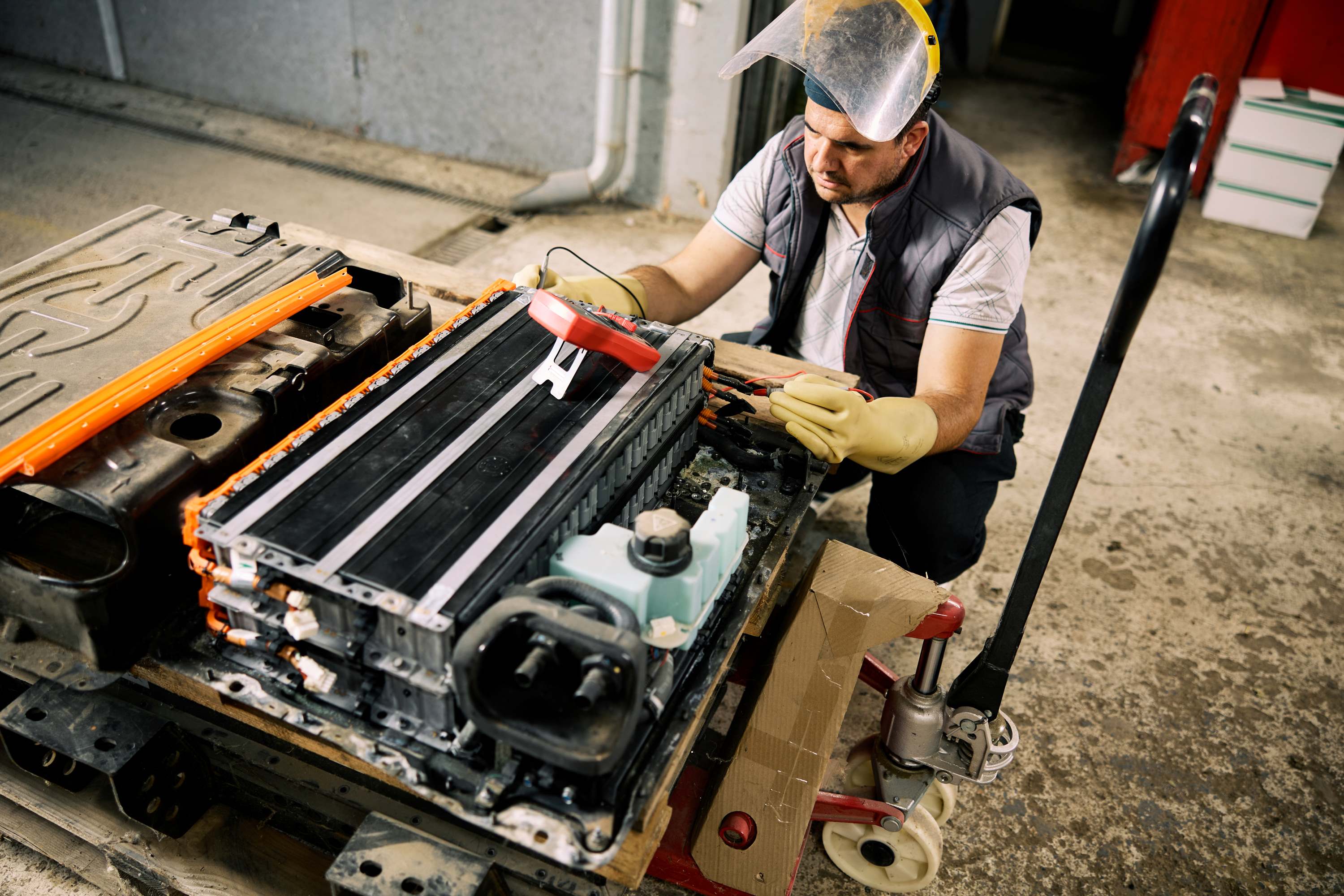
The electric vehicle (EV) transition intersects technology and the workforce. As EV fleets age out of manufacturer warranty periods, vehicles are moving from dealership service departments into the broader repair market, towards the small and medium workshops that constitute the large majority of the sector's employment base. Between 6,500 and 10,500 additional EV technicians (or Automotive Technicians with electrical skills)6 will be required by 2050.7 This is a substantial pipeline challenge in a sector already under significant stress: in 2024, the industry was short nearly 28,000 technicians and had 14,000 unfilled apprenticeship positions.8
The growing demand for electrical skills has prompted governments to consider licensing arrangements for EV work. Licensing, if not adequately informed by industry voice and applied in a proportionate manner, will create skills and service supply bottlenecks and productivity disruptions, slow EV uptake, and ultimately delay Net Zero outcomes.9
Skills supply constraints
Given that licences are tied to formal training, we also have to consider the skill supply side of the conversation. Currently, 41 RTOs nationally deliver the AURSS00064 Battery Electric Vehicle Inspection and Servicing Skill Set, with training costs estimated at between $1,500 and $3,000 per technician.10 Any licensing requirement that is tied to training will face the skills pipeline challenge. Smaller workshops, which make up the bulk of the sector, do not have the capacity to take large cohorts of workers offline for training. In such environments, technicians are likely multi-skilled, and licensing bottlenecks will delay service timelines and inflate consumer prices.
Harmonisation and licensing
The question of whether we need EV licensing is contested. The Productivity Commission has previously found no comparable difference in service quality or consumer safety outcomes between jurisdictions with automotive licensing and those without it.11 Major industry bodies have argued that an industry-led accreditation model, centred on the Australian Automotive Service and Repair Authority (AASRA), is more efficient than a statutory licensing regime and better suited to the sector's operational structure.
The more urgent conversation, which is less contested, is whether the settings that do exist across training packages, licensing arrangements, and skillset requirements should be applied with greater national consistency.
Inconsistent state licensing for EV work creates direct confusion for the industry. High-voltage EV batteries require specialised safety training, and inconsistent state arrangements make it difficult for workers, employers, and RTOs to plan coherently. NSW reconsidered specific licensing requirements for EV servicing; Western Australia already regulates EV repairers through the Motor Vehicle Repairer's Certificate issued by the Department of Mines, Industry Regulation and Safety; Queensland explicitly decided not to include EV work under the Electrical Safety Act.
Training Product Dimension
There is also a training package dimension that sits upstream of the licensing debate. The elective-heavy structure of some automotive qualifications means that workers completing the same qualification through different employers or different RTOs can emerge with substantially different skill sets. The Certificate III in Mobile Plant Technology (AUR31220) comprises 9 core units from a total of 36 units. A large employer reported that pathway providers could not deliver 8 of its required subjects, forcing it to fund an additional 7 units itself.12 When a worker trained in this environment seeks employment elsewhere, these gaps directly limit their mobility, a feature likely to exacerbate across state lines.
Where do we go from here?
First, licensing must be evidence-based and task-focused. The risk profile of EV servicing tasks varies significantly. A licensing framework calibrated to actual risk rather than the vehicle's notional voltage rating will be both more effective and less economically disruptive. AUSMASA's ongoing research will help direct this conversation.
Second, any national framework needs to be built with industry, not handed to it. AUSMASA's consultation processes exist precisely to enable this. The 2025 roundtables and the AUSMASA EV Summit produced direct industry feedback on EV licensing, with explicit calls to engage more deeply with industry and states on upskilling pathways and potential licensing design.
Third, whatever framework emerges needs to be designed for portability from the outset. The AMR scheme demonstrates both what is possible and its limits. A nationally consistent licensing and certification architecture does not require national uniformity in every detail, but it does require that the underlying competency definitions, the core unit baselines, and the risk thresholds that trigger licensing obligations be agreed upon at the national level.
AUSMASA EV Skills Mapping Project
AUSMASA's joint research project with the Australian Automotive Dealer Association (AADA) on EV skills mapping will produce a detailed map of such tasks and associated electrical hazards. The outcomes from the research project will help inform the industry and policy debate. We welcome opportunities to collaborate and engage with our stakeholders on harmonisation and other areas of interest.
1 AUSMASA, “Automotive Research Bulletin – February 2026”, 2026.
2 AUSMASA, “Automotive Research Bulletin – February 2026”, 2026.
3 AUSMASA, “Automotive Research Bulletin – November 2025”, 2025.
4 AUSMASA, “Automotive Roundtables Summary – November 2025”, 2025.
5 Mutual recognition does not produce definitional consistency, does not address jurisdictions where no licence exists, and cannot resolve structural gaps in a sector where the starting point is regulatory absence rather than regulatory divergence. Queensland does not participate in the AMR scheme at all, which is a significant limitation given the size of its automotive workforce.
6 In an EV, once the battery is removed or depowered, the vast majority of components can be serviced similarly to those in an internal combustion engine (ICE) vehicle.
7 AUSMASA, “Automotive Research Bulletin – February 2026”, 2026.
8 AUSMASA, “Automotive bulletin – October 2025”, 2025.
9 AUSMASA, “Automotive Research Bulletin – February 2026”, 2026.
10 AUSMASA, “Automotive Research Bulletin – February 2026”, 2026.
11 Productivity Commission, “Building a Skilled and Adaptable Workforce”, Inquiry Interim Report, 2025.
12 AUSMASA, “Automotive Research Bulletin – January 2026”, 2026.

About the author
Dr Aneeq Khan
Dr Aneeq Khan is Senior Manager, Workforce Planning and Policy at AUSMASA, overseeing our research, workforce planning, and policy functions. Dr Khan is an experienced research leader who has managed quantitative and qualitative research projects across industry, academia, and for government.